Regulatory Compliance In Medical and Dental Fitouts: What You Need To Know Before You Build
Designing and constructing a medical or dental practice is an exciting step, but one that comes with a complex set of responsibilities. Among the most critical is ensuring full compliance with Australian regulatory standards. Unlike retail or office spaces, healthcare environments must meet strict codes that govern everything from infection control and disability access to fire safety and radiation shielding.
These regulations exist to protect patients, practitioners, and staff. But without a clear understanding of what’s required—and how those requirements should be incorporated into your design—your fitout could face unnecessary delays, costly modifications, or even legal issues. Worse still, non-compliance can compromise patient safety and the ongoing viability of your business.
This guide outlines the key compliance areas you should understand before building or refurbishing your practice, and how an experienced healthcare fitout partner can help you navigate them confidently
1. Infection control and sterilisation areas

Infection control is a cornerstone of any medical or dental practice. Your practice’s design should support a clear and compliant sterilisation process that minimises the risk of cross-contamination, supports efficient workflows, and satisfies Australian health standards.
What to consider:
Defined clean and contaminated zones – A well-zoned sterilisation area reduces the risk of instruments crossing paths during the reprocessing cycle.
Hands-free sinks – These are mandatory in treatment rooms to ensure practitioners can maintain hygiene without touching taps.
Ventilation and air flow – Poor ventilation in treatment and sterilisation areas increases the risk of airborne contamination and undermines infection control efforts.
Layout efficiency – Instruments should move logically through the cleaning, packing, and sterilisation phases, reducing handling time and human error.
Failing to properly plan these areas could lead to failed inspections or require expensive layout changes after construction. An experienced healthcare fitout company will be familiar with these requirements and design accordingly.
2. Compliance with disability access standards
Ensuring your practice is accessible to all patients is both a legal requirement and a reflection of your values as a healthcare provider. The Disability Discrimination Act (DDA) and the National Construction Code (NCC) set out clear standards for accessibility in healthcare settings.

What your practice must include:
Step-free entry – Including ramps and compliant entry thresholds for wheelchair users.
Door widths and clearances – Wide enough to allow easy navigation with mobility aids.
Accessible bathrooms – With features like grab rails, appropriate turning space, and emergency call systems.
Reception counters at varied heights – To accommodate seated patients.
Pathways free of obstacles – With smooth, non-slip flooring and adequate lighting.
Overlooking accessibility can alienate a portion of your patient base and leave you open to legal risk and costly post-construction modifications.
3. Radiation shielding for X-ray and imaging rooms
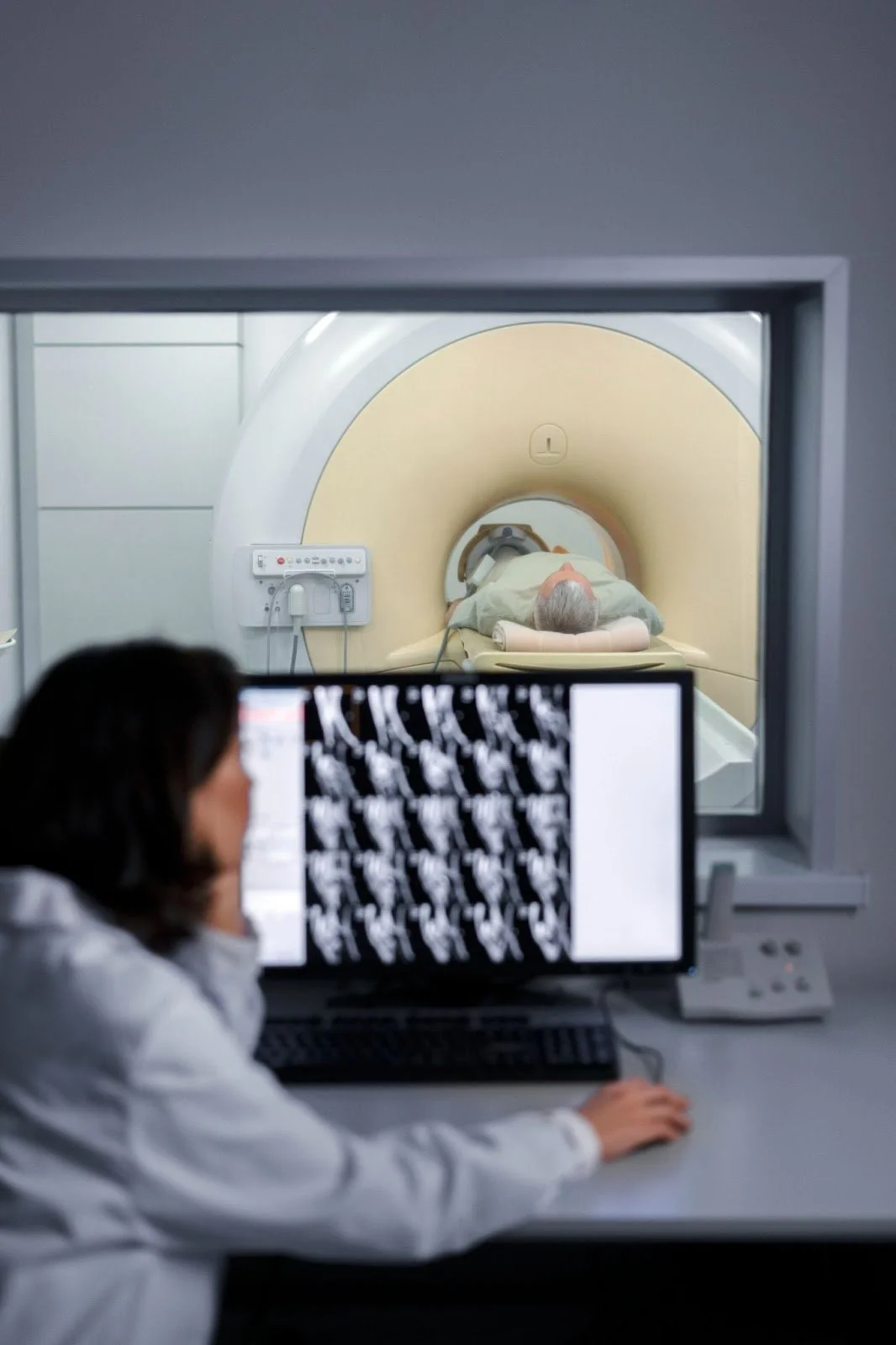
If your medical or dental practice includes diagnostic imaging, your design must comply with stringent radiation safety standards. These standards are set by state and national regulatory bodies, including the Australian Radiation Protection and Nuclear Safety Agency (ARPANSA).
Key requirements include:
Lead shielding in walls, ceilings, and doors – Proper thickness must be calculated based on the type and use of imaging equipment.
Room placement – Imaging suites should be located away from high-traffic areas and neighbouring tenancies to reduce exposure risks.
Control room visibility and safety – Leaded glass and operator positions must allow for clear observation without exposure.
Certification—Before it can operate imaging equipment, your practice will need radiation shielding reports and compliance certificates from a licensed consultant.
Getting this right requires collaboration between your fitout company, your equipment supplier, and a certified radiation physicist.
4. Fire safety and emergency exits
Fire safety is another essential element that must be considered early in the design and construction process. In a healthcare environment, where patients may have reduced mobility, fire planning goes beyond simply meeting minimum code. The main reason is to protect lives.
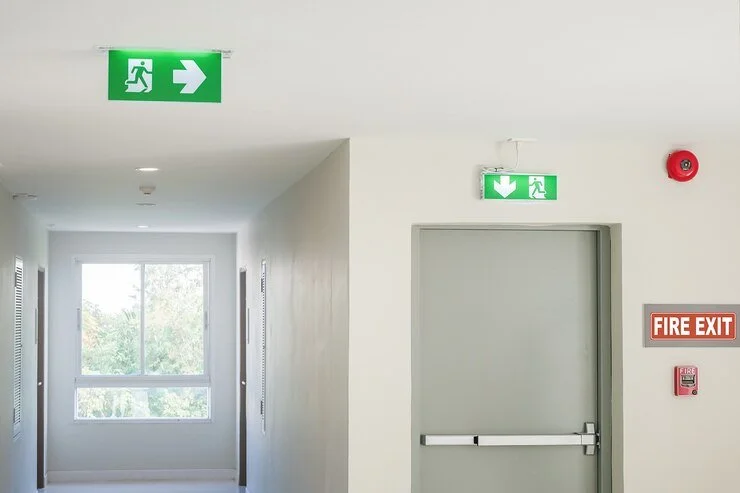
Essential fire safety inclusions:
Clearly marked and accessible emergency exits – With appropriate signage and compliant escape paths.
Fire-rated building materials – Certain internal walls, doors, and structural elements may need to meet fire resistance levels (FRLs).
Smoke detectors and fire suppression systems – Including sprinklers, alarms, and extinguishers in accordance with the Building Code of Australia (BCA).
Safe waiting zones or fire compartments—In multi-level practices, these may be required for patients who cannot evacuate quickly.
These measures should be integrated during design, not added as an afterthought. Retrofitting for fire compliance is disruptive and costly, and delays can affect opening timelines.
5. Statutory approvals and industry-specific regulations
Before you can begin construction, your fitout must go through the correct statutory approval process. Depending on the type of property and the work involved, you may need a Development Application (DA) or a Complying Development Certificate (CDC).
Here’s the difference:
DA approvals are often required when you’re changing the building’s use, undertaking structural works, or fitting out a space in a complex planning zone. These applications are submitted to your local council and can take several months.
CDC approvals are faster and can often be obtained through a private certifier if the proposed work meets a strict set of criteria.
You’ll also need to ensure your plans meet the National Construction Code (NCC), any relevant state health regulations, and the Australian Standards applicable to your profession.
Working with a team that’s familiar with these processes can help you avoid red tape and keep your project moving forward with minimal delays.
Why compliance shouldn’t be an afterthought
Regulatory compliance isn’t just a hurdle to clear—it’s the framework that allows your practice to operate safely, efficiently, and with confidence. A compliant practice not only protects your patients and team but also enhances your reputation and long-term success.
Cutting corners, or working with a team that doesn’t fully understand the healthcare sector, can cost more in the long run, both financially and operationally. From design and approvals to construction and handover, every stage should be carried out with compliance in mind.
Work with a partner who understands healthcare
At Akord Projects, we specialise in medical and dental fitouts across Australia. With deep knowledge of regulatory frameworks, compliance requirements, and healthcare-specific design, we help practitioners avoid costly pitfalls and create spaces that are not only functional and beautiful but fully compliant from day one.
Whether you’re opening your first practice or expanding an existing one, we’ll guide you through the entire process—from initial concept and due diligence to design, approvals, and construction.
Let’s build a practice that meets regulations, exceeds expectations, and stands the test of time. Contact us today to start the conversation.